
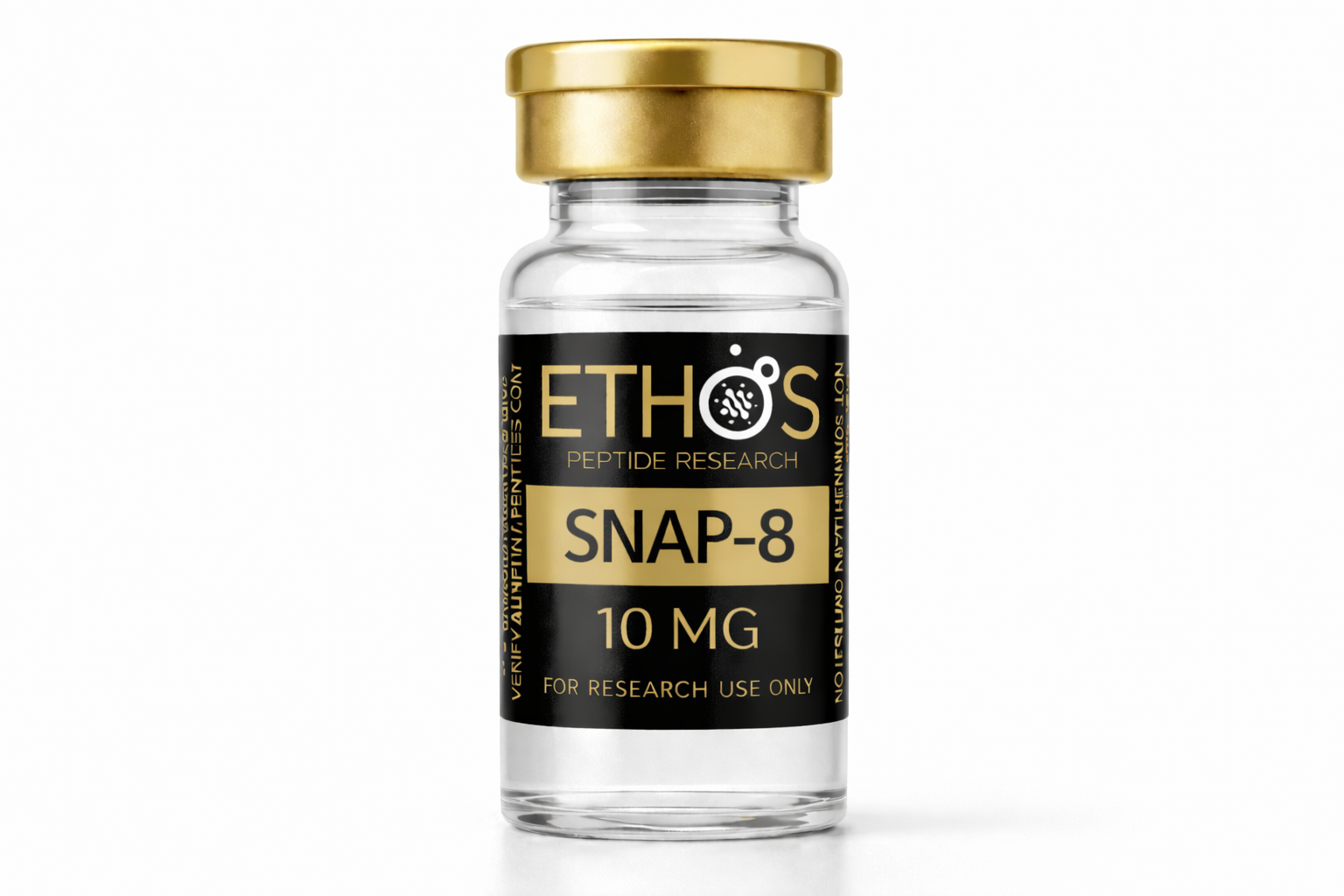


SNAP-8 Peptide
SNAP-8 is a synthetic octapeptide (Acetyl Octapeptide-3) widely investigated as a topical anti-wrinkle active that targets expression lines by modulating neurotransmitter release in facial muscles.
It is commonly explored as a non-invasive alternative or adjunct to more aggressive aesthetic procedures in advanced anti-aging formulations.
Identity
- Name: SNAP-8
- Chemical name / INCI: Acetyl Octapeptide-3 (also referred to as Acetyl Octapeptide-1 or Acetyl Glutamyl Heptapeptide-3 in cosmetic literature)
- CAS Number: 868844-74-0
- Sequence: Ac‑Glu‑Glu‑Met‑Gln‑Arg‑Arg‑Ala‑Asp‑NH2
- Molecular formula: C41H70N16O16S
- Molecular weight: ~1075.2 g/mol
- Appearance: White to off-white solid powder
Peptide Characteristics
- SNAP-8 is an eight–amino acid analogue of the N‑terminal domain of SNAP‑25, a key component of the SNARE complex involved in synaptic vesicle fusion and neurotransmitter release.
- The peptide is N‑terminally acetylated and C‑terminally amidated, a modification pattern that enhances stability and resistance to enzymatic degradation in topical environments.
- In cosmetic research, it is positioned as a next‑generation evolution of shorter “expression line” peptides such as Acetyl Hexapeptide‑8, with an extended sequence designed to optimize interaction with the SNARE machinery.
Research Background
- SNAP-8 has been studied for its potential to soften dynamic wrinkles (e.g., forehead and periocular lines) by attenuating the intensity of muscle contractions associated with repeated facial expressions.
- Topical formulations featuring SNAP-8 are typically positioned in high-performance serums and creams aimed at targeting expression lines and promoting a smoother, younger-looking skin surface.
- Ongoing investigations focus on optimizing concentration, delivery systems, and combination with complementary cosmetic actives in advanced anti-aging regimens.
Suggested Handling
- Supplied as a research-grade peptide for laboratory and formulation development use only; not intended for human injection, therapeutic, or diagnostic applications.
- Store lyophilized material in a sealed container, protected from light and moisture, under low-temperature conditions according to internal laboratory SOPs and supplier recommendations.
Related products
-
 Growth Hormone Peptides
CJC-1295 WO/Dac 5mg + Ipamorelin 5mg
$55.00 Select options This product has multiple variants. The options may be chosen on the product page -
 Individual Peptides
Aicar
$49.00 Select options This product has multiple variants. The options may be chosen on the product page -
 Cognitive Enhancement
NAD+
Price range: $38.00 through $62.00 Select options This product has multiple variants. The options may be chosen on the product page -
 Individual Peptides
Epithalon
Price range: $30.00 through $60.00 Select options This product has multiple variants. The options may be chosen on the product page


