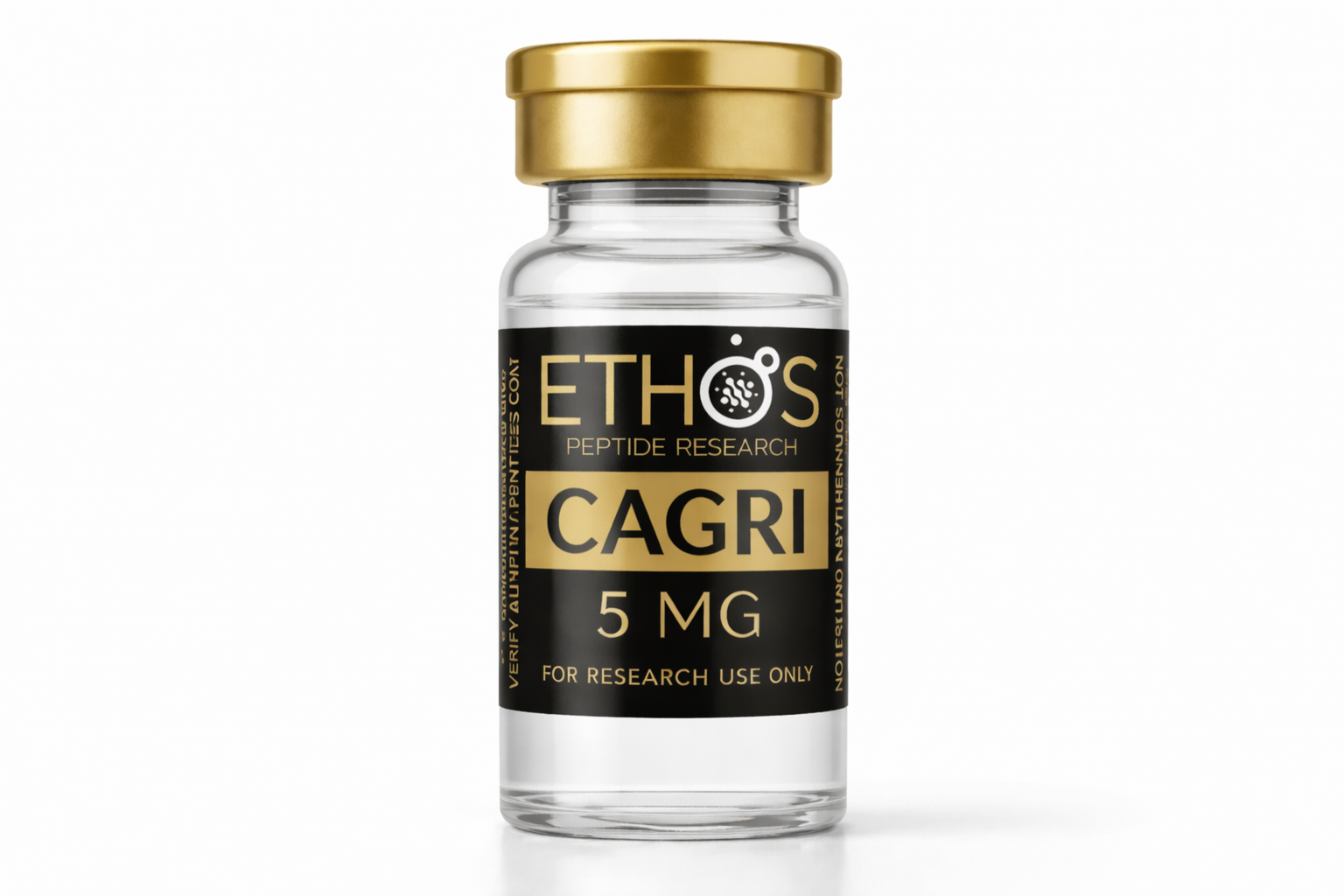

Cagrilintide (CAGRI) (Research Use Only)
Chemical Name: Cagrilintide (Long-acting acylated amylin analogue)
CAS Number: 1415456-99-3
Molecular Formula: C194H312N54O59S2
Molecular Weight: 4409.01 g/mol
Appearance: White to off-white lyophilized powder
Storage: Store at −20°C to −80°C (lyophilized); 2-8°C after reconstitution
Form: Powder; slightly soluble in DMSO (0.1-1 mg/mL)
Description
Cagrilintide is a novel long-acting acylated amylin analogue that acts as a nonselective agonist of amylin receptors (AMYR) and calcitonin G protein-coupled receptors (CTR). It is widely used in research to study appetite regulation, metabolic homeostasis, and weight management pathways. Cagrilintide’s unique structure includes N-terminal acylation with a γGlu linker and C20 fatty diacid moiety, along with helix-stabilizing mutations (N14E, V17R) that prevent amyloid fibril formation. This peptide has demonstrated significant potential in obesity and type 2 diabetes research through its dual receptor activation mechanism.[1][2][3][4][5] (Wikipedia) (PubChem)
Research Applications
- Appetite regulation and satiety signaling mechanisms
- Obesity management and weight loss interventions
- Type 2 diabetes and glycemic control research
- Energy balance and metabolic rate modulation
- Amylin and calcitonin receptor pharmacology
- Combination therapy studies (e.g., with semaglutide as CagriSema)
text
Key References
Mechanism of Action
Cagrilintide activates amylin and calcitonin receptors in the brainstem and hypothalamus, enhancing satiety signals and reducing food intake. The peptide’s acylated structure prolongs half-life and improves receptor binding affinity. Through AMYR/CTR agonism, Cagrilintide modulates gastric emptying, postprandial glucose excursions, and energy expenditure, making it valuable for studying metabolic disease pathways. The engineered helix-stabilizing mutations prevent aggregation while maintaining biological activity.[3][5][1]
Safety and Handling
Store lyophilized Cagrilintide powder at −20°C to −80°C in a moisture-free environment. Reconstitute immediately before research use in DMSO or aqueous buffers. After reconstitution, store at 2-8°C and use within a limited timeframe. The peptide is slightly soluble in DMSO (0.1-1 mg/mL) and sparingly soluble in PBS (pH 7.2). For research applications, ensure purity levels exceed 99% with proper Certificate of Analysis (COA) documentation.[6][7][8][9][10]
Disclaimer
For laboratory research use only. Not for human, veterinary, medical, or diagnostic use. Provided solely for scientific and educational research purposes. Researchers must comply with all applicable institutional and national regulations governing peptide handling and research conduct.
| CagriMG | 10mg |
|---|
Related products
-
 Individual Peptides
MT-2
$42.25 Select options This product has multiple variants. The options may be chosen on the product page -
 Cosmetic Peptides
GHK-CU
Price range: $30.00 through $40.00 Select options This product has multiple variants. The options may be chosen on the product page -
Individual Peptides
BPC-157
$26.00 Select options This product has multiple variants. The options may be chosen on the product page -
 Growth Hormone Peptides
Tesamorelin
$50.00 Select options This product has multiple variants. The options may be chosen on the product page