
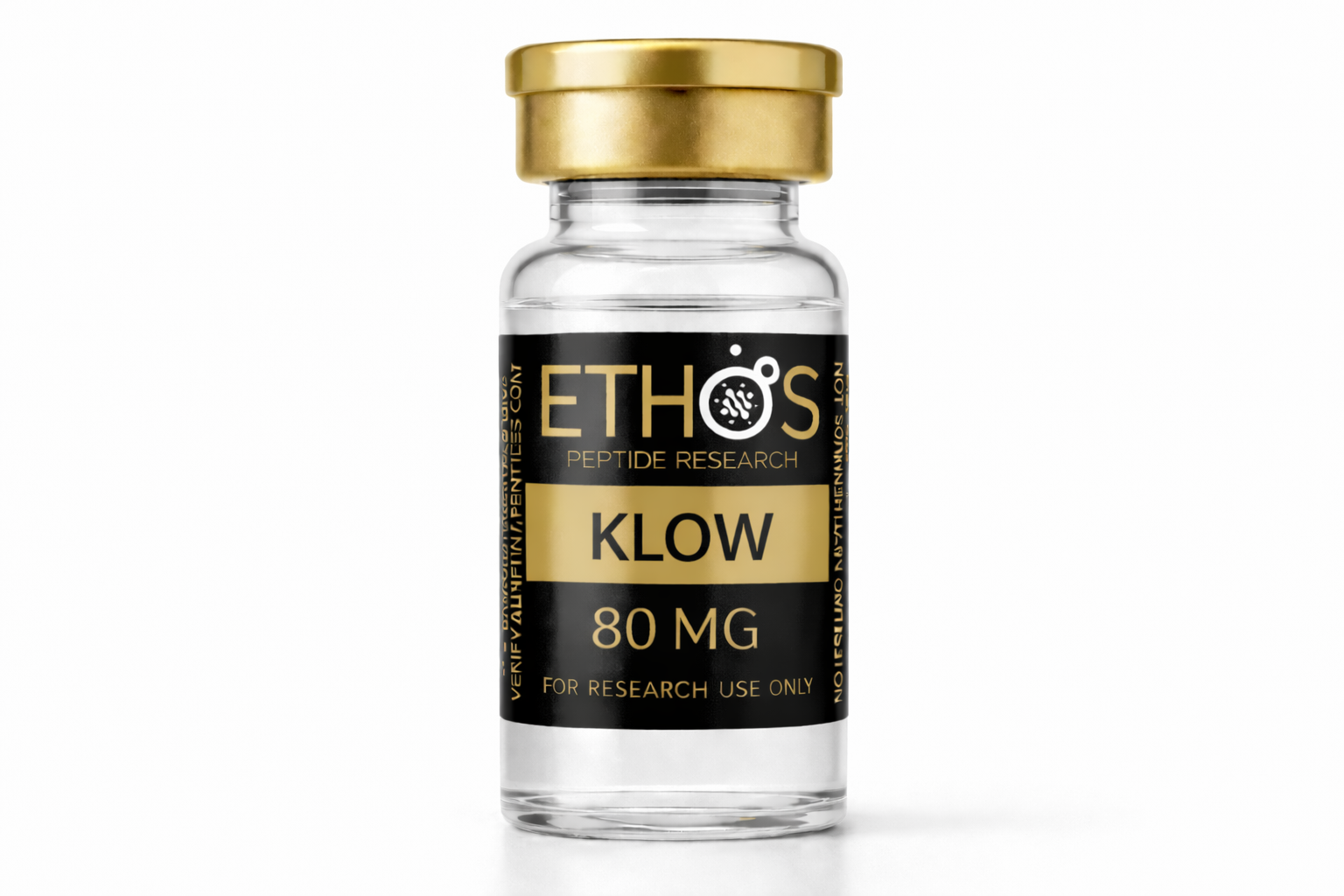
KLOW is a four-part blend combining KPV, GHK-Cu, BPC-157, and TB-500 into a single 80 mg research vial designed to investigate multi-pathway tissue repair, inflammation modulation, and regenerative signaling in experimental models.
Product overview
- Contains 10 mg KPV, 50 mg GHK-Cu, 10 mg BPC-157, and 10 mg TB-500 in one lyophilized vial for research use only.
- Formulated to allow simultaneous study of epithelial integrity, connective tissue remodeling, and musculoskeletal repair mechanisms in in vitro or in vivo animal models.
- Not for human consumption, injection, or diagnostic use; intended exclusively for qualified laboratory research.
Key research pathways
- KPV (Lys–Pro–Val) is a tripeptide fragment studied for its ability to modulate melanocortin receptors and inflammatory cytokine signaling, making it useful for models of barrier function and immune response.
- GHK-Cu is a copper-binding peptide investigated for upregulating collagen, elastin, and glycosaminoglycan synthesis while influencing metalloproteinase activity and gene expression related to tissue remodeling.
- BPC-157 is a gastric-derived peptide fragment explored for effects on angiogenesis, nitric oxide pathways, and fibroblast activity in gut, tendon, and ligament repair models.
- TB-500 (thymosin beta-4 fragment) is used to study actin cytoskeleton dynamics, cell migration, and systemic tissue regeneration across muscle, tendon, and epithelial structures.
Synergistic applications
- The combination allows researchers to evaluate overlapping and complementary effects on angiogenesis, extracellular matrix production, and inflammatory cascades in a single experimental system.
- KLOW is particularly suited for studies involving multi-tissue injury models, overuse or microtrauma paradigms, and complex wound environments where both local and systemic repair processes are of interest.
Format and storage
- Supplied as a sterile, lyophilized peptide blend intended to be reconstituted with bacteriostatic or sterile diluent immediately prior to experimentation, following laboratory-specific protocols.
- Store the un-reconstituted vial in a cool, dry environment away from light; many laboratories maintain peptides at refrigerated or frozen temperatures to help preserve structural integrity over time.